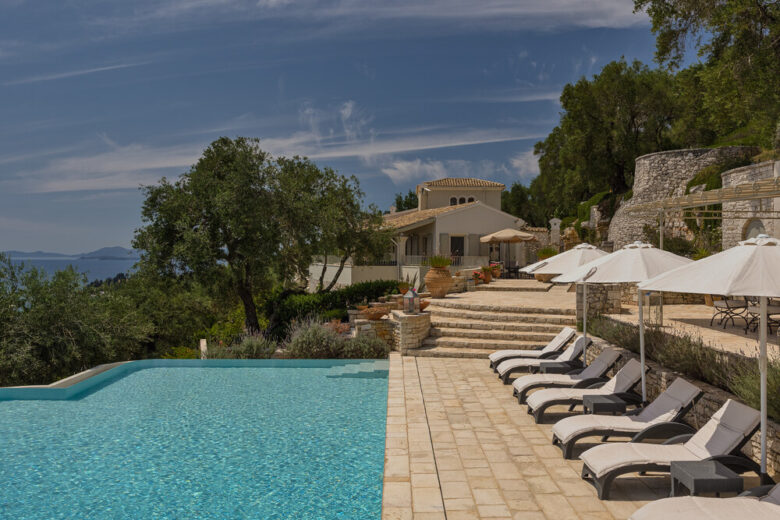
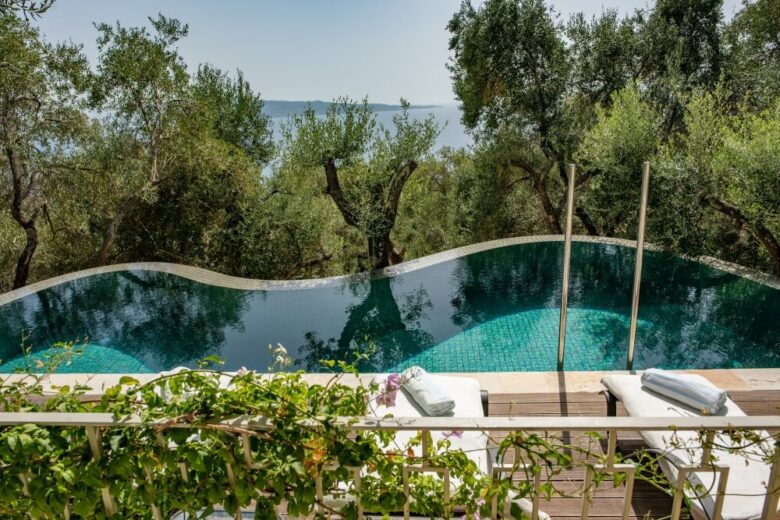
The north-east coast of Corfu is a narrow strip of pebble bays, olive groves and steep green hills, with Albania’s mountains showing across the water. Kalami sits at the heart of it. This small cove is where the Durrell story still feels close, because the white house on the rocks above the harbour, the tavern at the water’s edge and the quiet bay itself look much as they did when Lawrence Durrell lived here.
This article will help you see the places connected with the Durrells, plan a visit that fits the coast’s pace, and choose where to stay. You will find out which sites are worth your time, how the villages and walks around Kalami link together, and what to weigh up before you book. If you want to understand this stretch of Corfu properly, rather than pass through it on a day trip, it is a good place to start.

Kalami and the Durrell Connection
Kalami is a small bay on the north-east coast of the island, and it is the place most closely tied to the Durrell name. Lawrence Durrell, the writer, lived here in the 1930s, in a house at the edge of the water. His younger brother Gerald, who later became a naturalist and author, wrote about the family’s years on the island in My Family and Other Animals. That book is the main reason the Durrells Corfu story draws visitors to this part of the island today.
The house at the centre of it all is the White House Kalami. It stands right on the shore, with the sea a few steps from its door. Lawrence rented it with his wife, and it was there that he wrote part of Prospero’s Cell, his book about life on the island. The building is still recognisable from his descriptions. It is now run as a taverna with rooms, so you can sit beside the water and see the same view he saw. It is a working place, not a museum, so do not expect displays or a guided tour.
It helps to be clear about what the family actually did. The Durrells lived at several addresses on Corfu, and Kalami was Lawrence’s home rather than the whole family’s. Gerald’s books cover the wider island, and north-east Corfu is only one chapter of that story. The bay itself is quiet and compact. A short stretch of pebble beach, a few tavernas and a handful of villas sit around a sheltered curve of sea, with cypress and olive trees behind.
The television series adds another layer of confusion. It was filmed on the island and uses its scenery well, but it is a dramatisation. Events are rearranged, characters are changed or merged, and the tone is lighter than the books in places. If you know the series only, the books will feel more observant and less tidy. If you know the books, the series is best taken as a cheerful retelling rather than a record.
A visit to Kalami works best when you keep your expectations plain. You are not looking for a monument. You are looking for a place and a view that explain why a young writer chose to stay. A few things are worth doing on arrival:
- Look at the White House from the water’s edge and compare it with the descriptions in Prospero’s Cell.
- Have a meal or a coffee at the taverna and take your time over it.
- Walk to the end of the bay to see how the coastline curves and where the hills meet the sea.
- Read a few pages of Gerald’s book or Lawrence’s on the spot, since both describe this coast.

Exploring the North-East Coast: Bays, Villages and Walks
The north-east Corfu coast is best taken in small steps. From Kalami beach the shore breaks into a string of coves, each within a short walk or a brief boat ride of the next, so you can plan a morning or a full day without a car.
The nearest neighbour is Kouloura, a few minutes on foot along the road to the north. It is a tiny harbour with a stone quay, a few houses and a view back across the water to Kalami. The water here is calm and clear, and the harbour wall gives a firm place to enter the sea. Further on, a signposted path and a quiet lane lead on towards Agni, a small bay reached down a short flight of steps. Most visitors come for the tavernas on the shore, but the pebbles at the water’s edge are just as good for a swim before the tables fill.
Beyond Agni the coast opens towards Nissaki, where the cliffs are steeper and the beaches smaller and more secluded. The ground rises and falls here, so the route is slower, and sturdy shoes are worth wearing even on short stretches. Many of the best Corfu walks in this area follow old village paths between olive groves and the sea, and they are shaded for much of the way, which matters in summer.
Boats offer a simple alternative. Small local boats run along this coast in the warmer months, and they let you reach a bay from the water, then walk back at your own pace. Check the return arrangement before you set out, as services thin out later in the day.
A few practical points help. The sea is deepest and clearest off the rocky points, but the pebbles can be sharp, so water shoes are useful. Early morning and late afternoon are the quietest hours, when the light is softer and the bays are mostly empty. The middle of the day is warm and busy, which suits a long lunch rather than a walk. Carry water, as shops are few between the villages. If you are putting together a bag for days like these, the [Eremia shop](https://eremia.shop) has items that suit coastal travel.
A simple route from Kalami runs in one direction and finishes with a meal:
- Start at Kalami beach and swim early while the water is still.
- Walk north to Kouloura and pause at the harbour.
- Continue to Agni and stop at the shore for lunch.
- Go on to Nissaki, then return by boat or on foot in the cooler evening.

Planning Your Stay: When to Go and Where to Base Yourself
The best time to visit Corfu depends on what you want from the coast. May and June are warm enough for swimming, the hillsides are still green and the paths above Kalami are comfortable to walk. September is similar, with a sea that has held the summer heat and fewer people on the road. July and August bring the hottest days and the fullest villages, and the narrow lanes around the bays become slow. If you want a quiet Corfu holiday, the shoulder months give you most of the sunshine with far less pressure on the beaches and tavernas.
Where to stay Kalami is a question of how much you want around you. The village is small, with a handful of tavernas, a pebble beach and the white house on the point that ties it to the Durrells. A room or apartment in a nearby village keeps you within walking distance of the water and costs you little in convenience. A villa suits a family or a group that wants a kitchen, a terrace and space to spread out. Corfu north-east villas often sit on the slopes above the sea, so you gain privacy and views, but you will want a car for shopping and for reaching the wider coast.
Staying near the coast rather than in a busy resort changes the rhythm of the day. You can swim before breakfast, walk to a taverna in the evening and hear little beyond the cicadas and the water. Resorts offer more shops and nightlife, but that comes with traffic, noise and crowded sand. The north-east coast rewards those who prefer to move slowly and return to the same bay more than once.
If you would rather have a place chosen for its calm and its setting, you can look at the Eremia stays and see which suits your dates and group. Before you decide, it helps to settle a few points:
- How many people are travelling and how much space you need
- Whether you will hire a car or rely on walking
- How close you want to be to the sea
- Which month fits the weather and the quiet you are after
The choice in front of you is a simple one. You can treat Kalami as a single stop on a day trip, or you can stay on this coast long enough to feel the pace that drew the Durrells here. A day trip shows you the bay. A longer stay gives you the quiet mornings, the empty paths and the evening light on the water, which a few hours cannot offer.
Decide which of these suits you, then settle the practical side. Pick the weeks you can spare, and choose whether you want to be close to the water or a little higher in the hills. Everything else follows from that.
A sensible next step is to look at the places to stay that Eremia offers on the north-east coast. Read the descriptions, check the location of each against the bays you want to visit, and shortlist the ones that fit how you like to spend a holiday. Then you can plan your days around the coast rather than the other way round.